

On November 19, 2026, a Near Mint Hoothoot card sold for 15 cents. Put that historical price beside the earlier US list price of a Pokémon booster, add the marketplace’s minimum shipping to the card, and the single still costs less. The checkout is hypothetical, but it puts a price on choosing a card instead of opening a pack.
A Hoothoot changes the checkout
Imagine you have a space in your binder for Hoothoot 143/202. You could search for that particular card, or you could look at a sealed booster and enjoy finding out what is inside. Those purchases may end at the same binder, but they start with different promises.
The most recent dated Near Mint sale shown for Hoothoot is the one at the center of this comparison. Near Mint is the condition recorded for that copy. The sale tells you what it fetched, not what a seller will ask for another copy today.
The other reference is the $4.49 US list price for a standard booster in September 2026. That price comes from an earlier month than the Hoothoot sale. It is a reference price, not a promise that a pack is on a shelf at that price now.
For the single, the table adds TCGplayer’s minimum marketplace shipping charge for orders under $5, effective May 26, 2026. That charge is stated for the TCGplayer marketplace; a country-specific rate is not established here. It is an assumption for this comparison, not the verified shipping on the historical sale.
| Purchase | Price | Shipping assumption | Comparison total |
|---|---|---|---|
| Near Mint Hoothoot 143/202, sale on November 19, 2026 | $0.15 | $1.49 TCGplayer marketplace minimum | $1.64 |
| Standard booster, US list price in September 2026 | $4.49 | $0.00 assumed | $4.49 |
Under these assumptions, the single costs less than the pack; this is a price comparison, not a recommendation.
The table assumes the booster can be bought at list price without delivery and leaves tax out of both sides. An actual single’s price and shipping could differ. It also compares one named card with a pack whose contents have not been established as including that Hoothoot.
The wrapper has a case of its own
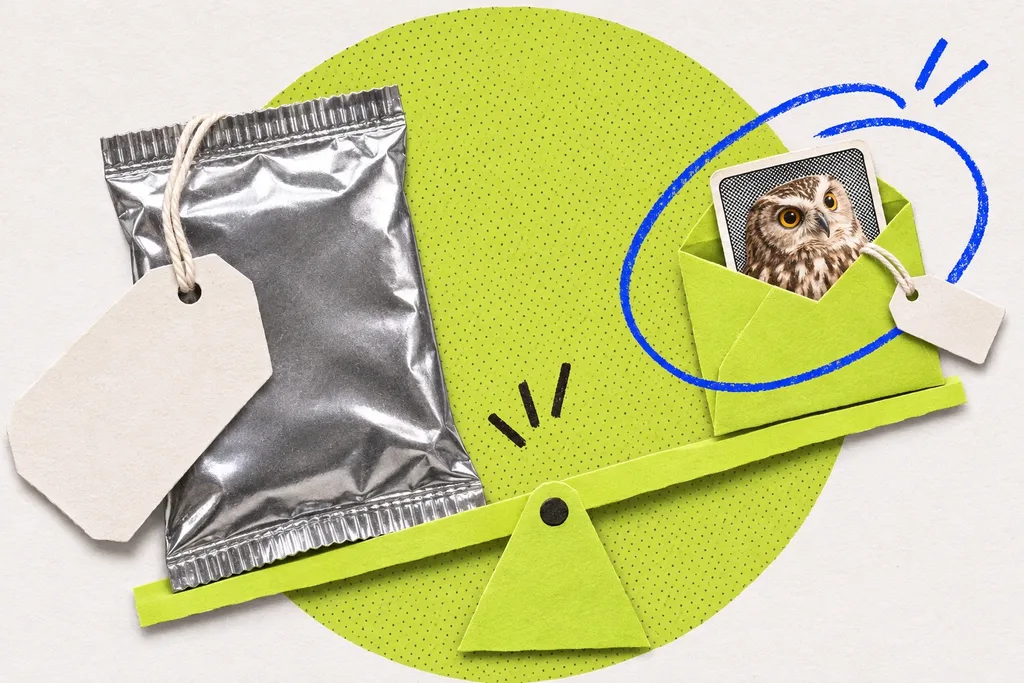
The strongest objection to the comparison is sitting inside the wrapper. A booster contains more than one card, and opening it can be the part you wanted to pay for. A single gives you a choice; a pack gives you a reveal.
Pokémon says a booster contains 10 game cards: commons, uncommons and foils, including at least one foil rare or higher. It also includes an Energy card and a code card redeemable in Pokémon TCG Live.
That mix gives you more to look through than a single envelope would. You might want cards for a game, or simply like seeing which characters turn up. The enjoyment of opening the wrapper has no separate price tag, but it can still be part of what makes the purchase appealing.
The comparison becomes narrower when the space in your binder is reserved for one specific card. A standard booster’s list price does not tell you that it belongs to a set containing this Hoothoot, much less that the card is in the pack you open.
A whole box does not settle the question. Pokémon says it does not guarantee a specific card ratio or pull rate across an entire booster box. More packs give you more cards to open, but that statement does not promise the particular copy you are looking for.
So the lower hypothetical Hoothoot checkout does not make the other cards in a booster worthless. It answers a different question: what happens to the price when the thing you want is already identified? The fun of not knowing remains on the other side of the comparison.
The buyers grew up, and the cards stayed
The Pokémon Trading Card Game launched in Japan in October 1996. A card can be something you play with, something you keep, or both. The life of the game has been long enough for the same character to mean different things at different moments.
A March 2025 Circana survey found that 19% of adult toy shoppers had bought Pokémon cards for themselves in the preceding six months. That is a share of the adult toy shoppers surveyed, not a share of all adults.
Among those who bought the cards for themselves, about a quarter played the game. That leaves room for plenty of uses beyond a match, though the survey figure does not tell us why each person bought their cards.
Think of the difference between building a deck and filling a binder page. In one, a card might be there for what it does in play. In the other, the character or the particular version can be the point. A sealed pack can add to either, but it leaves the exact contents to chance.
The retail side is large enough to show up in an earnings report. In its US results for the third quarter of 2026, Target said record Pokémon sales helped a broader category grow. The category figure covers more than Pokémon, so it cannot tell us how much came from cards alone.
That report and the survey describe different things: sales at a retailer and purchases by a surveyed group. Neither tells us that the game’s launch caused today’s buying. Together, they show how a card can belong to a personal collection and a much bigger retail business at the same time.

The envelope changes the price
Search results can make a cheap single look almost free until you reach the delivery line. In the Hoothoot example, the minimum shipping charge alone is about ten times the reported card price. The envelope matters more to this hypothetical checkout than the cardboard inside it.
Recent Near Mint sales of this Hoothoot also showed a range of prices. A sale history is a record of transactions, not a menu of prices that sellers must honor. Another copy can appear at a different price, and there may not be a matching listing when you search.
Condition, the seller’s current price and shipping all affect the comparison. The character name alone does not establish that a listing describes the same condition as the reported sale. A cheaper-looking result and the Near Mint copy in the table may be different purchases.
The shape of the order matters too. TCGplayer says marketplace cards ordered from the same seller ship together for one shipping fee. If your search includes several cards, their sellers can therefore matter to the delivery total, not just the individual prices.
There is another part of the transaction after the envelope arrives. For an order problem, TCGplayer directs buyers to Order History and then Contact Seller. Its refund or replacement process has a request deadline measured from the estimated delivery date.
The marketplace also says it must receive a card to assess a suspected counterfeit claim. That is a different question from what the card sold for: the price history can describe a transaction, but it cannot establish the condition or authenticity of a different copy.
The money takes different routes
At the register, a sealed booster has one price for the buyer. That does not mean the whole amount is the retailer’s profit, or tell us what the Pokémon business receives. The list price does not provide a breakdown among the businesses involved in getting a pack to the shelf.
Target’s report establishes that Pokémon sales matter to its retail business. It does not provide a receipt for an individual booster. We can see the purchase at one end and the retailer’s reported result at the other, without knowing the split in between.
A marketplace single has a more visible fee structure. A seller offers an identified card, and the marketplace publishes charges for sellers using its service. That is a different route for the buyer’s money from taking a sealed product to a retail register.
TCGplayer’s Level 1–4 marketplace seller schedule lists a commission on the order subtotal and a transaction fee based on the order total plus a fixed amount. The country coverage of that schedule is not established here, and the historical Hoothoot sale does not identify the seller’s applicable fee.
The fee structure is a reminder that a card’s sale price is not the same as the seller’s profit. Charges can have different bases, and the order still has to be fulfilled. The hypothetical buyer total in the table cannot tell us what the seller on the historical transaction kept.
That distinction matters especially for a card priced in cents. A low price can be attractive to someone completing a collection while leaving very little room between the sale and the costs around it. The buyer’s bargain and the seller’s result are not the same number.
A busy market has room for a small card
A report from Spokane Valley described people turning to singles when Pokémon packs were unavailable. That puts another kind of choice beside the Hoothoot comparison: sometimes the single is the route open to you when the wrapper is not.
In the same report, shop manager Charles Xavier pointed to nostalgia as part of the appeal. It is one observation, not a measure of every buyer’s motivation. Still, it gives the familiar character on a card a place in the story that a sale price cannot show.
Collector Bry Tillett told the paper that his channel and card-show sales reached six figures in 2025, while his total profit was minimal. Sales are money coming in; profit is what remains after costs. His account gives those two words very different weights.
His result does not establish what another seller earns, just as the local shortage does not establish where prices go next. What it does show is that the amount passing through a card business can look very different from the amount left over.
The binder does not record whether its Hoothoot arrived in an envelope or came out of a wrapper. You might remember, though. When the card is finally on the page, was the part you wanted the character itself, or the moment before you knew what you had?
FAQ
How much would every Pokémon card cost?
This comparison does not establish a total. A meaningful estimate would need a defined list of cards and versions, a condition for each copy, current prices and the cost of getting them. Even for Hoothoot, the reported sale price is not necessarily the price of a current listing.
Can you buy Pokémon cards individually?
Yes. An individual card offered for sale is often called a single. A listing lets you choose a named card rather than open a sealed pack to see what is inside. Condition, the seller’s current price and shipping all affect the comparison. A past sale does not guarantee a matching offer.
Is buying a Pokémon single cheaper than a booster pack?
The historical Hoothoot sale in this article comes out below the earlier US booster list price after hypothetical minimum marketplace shipping. That result is specific to the comparison and its assumptions. Other cards, current listings, delivery charges and pack prices can produce a different result.
What comes in a Pokémon booster pack?
Pokémon describes a booster as containing game cards across common, uncommon and foil categories, plus an Energy card and a code card for Pokémon TCG Live. It offers a mix rather than a buyer’s choice of each individual card. The standard pack comparison does not establish that it contains the Hoothoot discussed here.
Sources
- The Lab TCG — Hoothoot 143/202 Sword & Shield Base Set price (2026-11-19)
- DexCompare — Pokémon TCG MSRP: US list prices for sealed product | DexCompare (2026-09)
- TCGplayer — New Minimum Shipping Price Ahead of Mayhem Promotion (2026-05-26)
- Pokémon Support — What can I expect in a Pokémon Trading Card Game booster pack? – Pokémon Support
- The Pokémon Company — History|The Pokémon Company (1996-10)
- Retail Brew — Collectible trading cards and adults drive toy sales in 2025: Circana (2025-03)
- Target Corporation — Target Corporation Reports Third Quarter Earnings (2026-11-18)
- TCGplayer — How is shipping applied to marketplace orders? – TCGplayer.com
- TCGplayer — TCGplayer Safeguard – TCGplayer.com
- TCGplayer — TCGplayer Fees – TCGplayer.com
- The Spokesman-Review — Inland Northwest card collectors, players hard-pressed to find Pokémon's 30th anniversary cards (2026-10-04)