
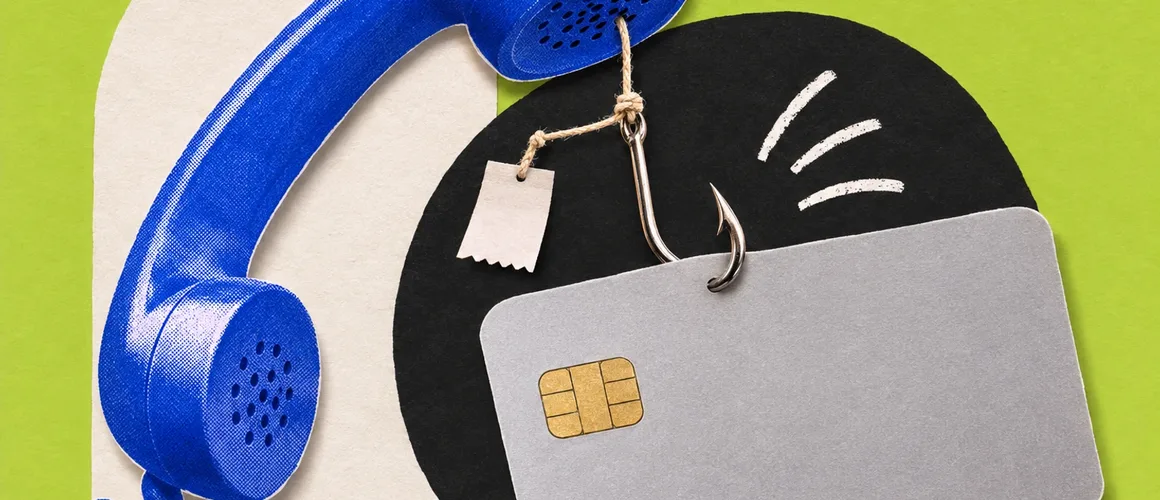
A Marketplace buyer offers to test a Venmo payment, then supplies a support number when it fails. In a reported 2026 case in Matthews, North Carolina, a $20 test preceded a $25,000 total loss; the report does not establish whether any of it went through Venmo. A payment problem can become a bank problem, and the buyer should not be your source for support.
The payment test became a phone call
Imagine you have a listing up and a prospective buyer is ready to talk payment. A test can sound like a small administrative step before you finish the deal. In Matthews, the proposed Venmo payment did not go through, and the buyer supplied a number described as support.
The seller called and shared bank information with the person who answered. Scammers later stole thousands of dollars from her bank account. The report does not establish that the person who answered was the person who stole the money.
The sequence matters because the apparent fix came from the same chat as the payment problem. Once a buyer hands over a number, calling it can feel like a way to get the sale moving again. The conversation has quietly moved away from the listing and toward information that can affect your bank account.
The test was not the item’s established sale price, and the report does not establish that a sale was completed. Police sought access to accounts into which the money went, but the report did not say whether access was granted or whether the seller recovered anything.
Shared bank details? Start with the bank
If you have shared bank information with someone you suspect is fake support, contact your bank or credit union promptly using contact details you found independently. Tell it what you shared and what happened. For a scam-related bank transfer, the Federal Trade Commission advises you to ask whether the transfer can be reversed.
If you also sent money through a payment app, report the scam to the app and ask whether that payment can be reversed. These are separate conversations: the bank needs the details of the bank side, and the app needs the details of the app payment. Neither request guarantees a reversal.
You do not need to decide which company is responsible before making those calls. Explain whether you sent a payment yourself, whether you see a transfer you did not approve, and what information you gave the caller. Those details describe different parts of the problem, not competing versions of it.
A report can also do something a chat cannot. The FTC says scam reports can help it and law enforcement identify and stop scams. That is not a promise of repayment, but the details of the exchange may help investigators.
A support number is still part of the chat
The buyer’s number may look like an escape from the problem in the chat. It is still information supplied by the person on the other side of that chat. Going to a contact page you find independently gives you a way to check without relying on the proposed buyer’s instructions.
Venmo publishes 855-812-4430 for general support. As of November 2026, phone support is listed daily during the day and evening, Central Time. Its contact page has the hours; go there independently rather than treating the number in a buyer’s message as a shortcut.
The name someone uses on a call is not proof of who they are. Venmo says not to share passwords or one-time verification codes, including with anyone claiming to be its support team. A request for a code is not the same thing as verification of the person asking.
The Matthews report is not the only account of a fake-support pitch. A separate police warning in Manassas Park in June 2026 described a Marketplace pattern involving requests for financial information or access to a device. It does not establish how common the pattern is, or that the cases were connected.
The test amount did not set the limit
The reported total loss was 1,250 times the proposed test amount. That is a comparison with the attempted test, not with the price of the item or a completed Venmo payment. The small number in the chat was no measure of what could be exposed after the call.
| Measure | Amount | Source and period |
|---|---|---|
| Proposed Venmo test in Matthews; payment did not go through | $20.00 | WSOC-TV, 2026 |
| Reported total loss in Matthews; amount through Venmo unknown | $25,000.00 | WSOC-TV, 2026 |
| Median loss before recovery among US adults who lost money in peer-to-peer payment fraud | $500.00 | Federal Reserve, survey about 2025 |
| Median loss after recovery among the same surveyed group | $200.00 | Federal Reserve, survey about 2025 |
The national figures come from a Federal Reserve survey about 2025. They cover US adults who lost money in fraud involving peer-to-peer services, meaning apps people use to send money to each other. The median is the middle reported loss in that group, not a forecast for an individual claim.
There is a fair objection here: one reported case cannot establish a general pattern, and the payment path of the full loss is unknown. The table does not make the Matthews loss a typical Venmo loss. Nor can it tell another seller the odds of being targeted.
What the case does show is narrower and still useful: the proposed payment was only the start of the interaction. The conversation moved to a phone number and then to bank information. Judging the potential exposure by the test amount alone would miss the part of the exchange that followed.
A purchase label is not a blanket refund
A reasonable response is to ask about Purchase Protection. Venmo has a program for eligible purchases, and a label attached to a payment can look reassuring when you are dealing with someone you do not know. But marking a payment as a purchase does not automatically make it eligible; the program’s rules still apply.
One detail matters for a Marketplace handoff: the eligibility rules generally exclude items collected in person, with an exception for in-person Venmo QR-code transactions. That distinction concerns the payment and its eligibility. It does not tell us whether protection applied to the Matthews exchange or whether a claim was made.
There can be a cost to receiving a payment marked for goods and services, too. In the United States, Venmo lists a 2.99% seller fee when the sender identifies a payment to a personal account that way. The fee is a cost of that payment; it does not settle whether the transaction meets the protection rules.
The protection question and the bank-account question should not be folded together. A program’s rules for an eligible purchase do not, on their own, establish reimbursement for money taken after bank details were shared. In the reported case, the test did not go through and the source does not establish a protection outcome.
Getting money back has its own rules
A payment you approved is different from a transfer you did not authorize. If a fake buyer or seller persuaded you to send a payment yourself, Venmo says it may not be reversible. That is a reason to ask the app about the payment promptly, not a promise that asking will bring it back.
For certain unauthorized transfers, Venmo’s user agreement sets a reporting condition. Users should report them within 60 days of an account statement, or they may not recover later losses Venmo could have stopped. The condition is not a reason to wait before reporting a suspicious transfer.
In the Federal Reserve survey, a little over half of US adults who experienced fraud involving a peer-to-peer service said they lost money they did not recover. That group includes different services and circumstances. It is context for the uncertainty after a report, not a verdict on what will happen to yours.
The Matthews report leaves the recovery question open. It describes police seeking access to the destination accounts, not a completed recovery. That matters when a story travels as a warning: the reported loss is real to the account, but the report does not supply an ending in which the money is returned.
A payment problem can make a support number feel like the quickest route back to an ordinary sale. Before the chat hands you the next step, there is a question worth keeping: who supplied that number?
FAQ
How do I contact Venmo support by live chat?
The information here does not establish Venmo’s current live-chat availability. Check its contact page independently for available options. Venmo publishes 855-812-4430 as its general-support number, with phone support daily from 8 a.m. to 8 p.m. Central Time. Do not rely on a number supplied by a buyer in a Marketplace chat.
What are five of the most current Venmo scams?
The reporting here does not establish a list of five current scams. It documents a fake-support pitch after a failed Marketplace payment, a separate warning about requests for financial information or device access, and Venmo’s warning about payments to fake buyers or sellers. The details matter more than an unverified count.
Why are people leaving Venmo?
The Matthews report does not establish whether people are leaving Venmo or why. A case in which an app’s name appears in a scam cannot tell us how many people use the service or why someone might stop. The reported loss also cannot be assigned to Venmo without a known payment path.
Does Venmo send out emails?
The information here does not establish which emails Venmo sends. Do not assume a message is genuine just because it uses the company’s name. Find Venmo’s contact page independently if you need support, and do not share a password or one-time verification code with someone claiming to be support.
Does Venmo reimburse scam losses?
Reimbursement is not automatic. Venmo says a payment you personally approved may not be reversible, while certain unauthorized transfers have reporting conditions under its agreement. Purchase Protection also has eligibility rules. Report a payment promptly, explain what happened and ask about reversal; contact your bank separately if a bank transfer is involved.
Sources
- WSOC-TV — Facebook Marketplace scam costs Matthews woman $25K – WSOC TV (2026)
- Federal Trade Commission — What To Do if You Were Scammed | Consumer Advice
- Venmo — Common Scams and How to Stay Safe with Venmo | Venmo (2026-11-28)
- Venmo — User Agreement | Venmo (2026-11-28)
- Federal Trade Commission — Mobile Payment Apps: How To Avoid a Scam When You Use One | Consumer Advice
- Venmo — Venmo Help Center - Contact Us | Venmo (2026-11-28)
- The MoCo Show — Police Warn Residents About Facebook Marketplace Scam - The MoCo Show (2026-06)
- Federal Reserve — The Fed - Banking (2025)
- Venmo — Purchase Protection Eligibility | Venmo (2026-11-28)
- Venmo — About Venmo Fees | Venmo (2026-11-28)